

Why Choose Us
Professional Team
Our cutting-edge facilities and our highly qualified team of professionals allow us to offer the complete range of forged steel flanges and high-spec forged components. Our product line features the highest standards of quality, productivity and reliability.
Quality Control
Our elite sales staff and our veteran machinists work together to ensure that the highest quality of care is implemented in every stage of creating each precision engineered flange that leaves our shop.
Advanced Equipment
We have 2000 square meters of storage and processing center which covered equipment using in slitting, cutting in horizontal, laser cutting, plasma and grinding machine and embossing machine.
Custom Service
We offer a range of value-added services, including custom fabrication and assembly, to enhance our clients experience.
What is Stainless Steel Plate
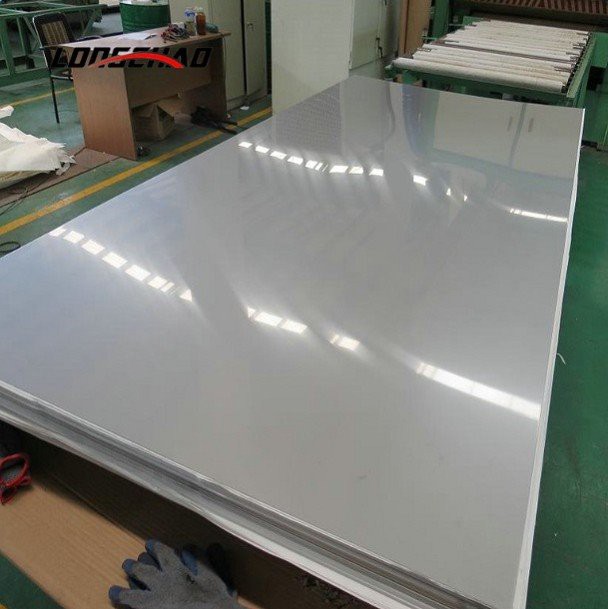
Stainless steel is one of the most widely used materials in the production of various industrial products. The reason has been its unique properties of being corrosion-resistant, durable, and strong. stainless steel plate is one of the popular forms of this material that is preferred by many manufacturers across the globe. The plate is made from a type of austenitic stainless steel alloy that contains titanium, which gives it the ability to withstand high temperatures and pressures.
-
![316l Stainless Steel Plate]() Add to Inquiry
Add to Inquiry -
![321 Stainless Steel Plate]() Add to Inquiry
Add to Inquiry -
![Ss316 Plate]() Add to Inquiry
Add to Inquiry -
![316l Stainless Steel Plate]() Add to Inquiry
Add to Inquiry -
![Stainless Steel Sheet Metal 4x8]()
Stainless Steel Sheet Metal 4x8
Add to Inquiry -
![Polished Stainless Steel Plate]()
Polished Stainless Steel Plate
Add to Inquiry -
![10mm Stainless Steel Plate]() Add to Inquiry
Add to Inquiry


Benefits of Stainless Steel Plate
Corrosion-resistant
The 321 stainless steel plate is highly resistant to corrosion, making it ideal for use in applications where exposure to corrosive chemicals or materials is common.
High-Temperature Resistance
The plate can withstand high temperatures without losing its strength and shape, making it suitable for high-temperature applications.
Easy to Work With
The plate is known for its excellent weldability and formability, making it easy to work with during the manufacturing process.
Durable and Long-Lasting
The plate is made of an alloy that is durable and long-lasting, making it a wise investment for merchants looking for quality products.
What are the Applications of Stainless Steel Plate

01
Aerospace Industry
The plate is extensively used in the aerospace industry for manufacturing high-temperature engine components, exhaust systems, and structural components.
02
Chemical Industry
The plate is used in the chemical industry for manufacturing equipment that needs high resistance to corrosive chemicals.

03
Food Industry
The plate is used in the food industry for manufacturing equipment and storage containers due to its ease of cleaning and resistance to corrosion.

04
Petrochemical Industry
The plate is used in the petrochemical industry for manufacturing equipment that operates at high temperatures and pressures.
●Type 304:The most common of austenitic grades, containing approximately 18% chromium and 8% nickel. It is used for chemical processing equipment, for food, dairy, and beverage industries, for heat exchangers, and for the milder chemicals.
●Type 316:Contains 16% to 18% chromium and 11% to 14% nickel. It also has molybdenum added to the nickel and chrome of the 304. The molybdenum is used to control pit type attack. Type 316 is used in chemical processing, the pulp and paper industry, for food and beverage processing and dispensing and in the more corrosive environments.
●Type 317:Contains a higher percentage of molybdenum than 316 for highly corrosive environments. It must have a minimum of 3%“moly”. It is often used in stacks which contain scrubbers.
●Type 317L:Restricts maximum carbon content to 0.030% max. and silicon to 0.75% max. for extra corrosion resistance.
●Type 317LM:Requires molybdenum content of 4.00% min.
●Type 317LMN:Requires molybdenum content of 4.00% min. and nitrogen of .15% min.
Stainless steels are alloys containing iron, relatively low carbon, a minimum 10.5% chromium and up to 30% nickel. However they are typically 18% chromium and 8% nickel.
304 and 304L ASTM A240 stainless steel plate is a standard 18-8 material – meaning it contains 18% chromium and 8% nickel. 304 Stainless steel plate is one of the most versatile stainless steel materials available. It has excellent forming and welding characteristics.
Process of Stainless Steel Plate
Melting the Raw Materials: The different stainless steel materials are placed in a furnace (typically an electric furnace for modern stainless steel manufacturing applications) and heated to their melting point.
Removal of Excess Carbon: The molten material placed into a vacuum oxygen decarburization (VOD) or argon oxygen decarburization (AOD) system to remove excess carbon.
Tuning or Stirring: To help fine-tune the quality of the final product, the molten steel may be stirred to help distribute and/or remove specific stainless steel components from the mixture.
Forming the Metal: As the stainless steel begins to cool, it is put through a variety of forming processes—starting with hot rolling while the steel is still above its crystallization temperature.
Heat Treatment/Annealing: To relieve internal stresses and alter the stainless steel’s mechanical properties, it may be annealed (heated and cooled under controlled conditions). If annealed, the steel may need to be descaled so the protective oxide layer isn’t compromised.
Cutting and Shaping: After the annealing process, stainless steel is put through a variety of cutting and shaping processes to create an ideal final product for the application.
Applying Surface Finishes: The stainless steel manufacturer may apply different surface finishes to their stainless steel billets, blooms, or wires before shipping them to other manufacturers.
Product features of Stainless Steel Plate
Stainless steel sheet/plate is versatile and used in a variety of applications. It is primarily selected for its resistance to corrosion, longevity and formability. Typical uses of stainless steel sheet/plate include, construction, food service applications, transportation, chemical, marine, and textile industries.
Maintenance Tips for Stainless Steel Plate
Protect from Scratches
Use rubber mats in sinks to prevent dishes from scratching the surface. Be careful with sharp objects.
Rinse Chlorides
If you live near the coast, salt in the air can settle on surfaces. Rinse occasionally with fresh water.
Polish Occasionally
Specialised stainless steel polishes can give your surfaces a brilliant shine, restoring the luster of older installations.
Avoid Steel Wool
Steel wool pads can leave particles which can rust and stain the surface.
How to Choose Stainless Steel Plate
Grades
The two most typically used grades are 316 and 304. Now, 316 is preferred above 304 if your application is in a corrosive environment like salt water. Although both 304 and 316 suffer pitting and crevice corrosion, the 316 grade is notably less. Grade 316 is considered a “food grade” used where food products are being handled. If you were looking to use a piece of stainless steel sheet as a splashback, however, you could save some money and use grade 304 because it would not be coming into contact with the food preparation.
Thickness
The thickness of a sheet is most commonly between 0.4mm and 2.5mm. Anything thinner than 0.4 would usually be referred to as foil, and more than 3mm thick would mean a plate. Stock standard dimensions of a 0.4mm up to 0.9mm thick sheet would be either 2000mm X 1000mm or 2500mm x 1250mm. Between 0.4mm and 2.5mm, you would also usually be able to find a 3000mm X 1500mm available. Having selected the right thickness and grade for your project, you can now have your stainless-steel sheet custom cut by the best ss coil manufacturers in India. Using a guillotine, laser cutter, or waterjet cutting machine, you can cut some very complex shapes with precision and accuracy.
Finish
Depending on your application, you can settle on what finish you would like the sheet to have. The manufacturing process of these sheets by the stainless steel manufacturers in India- like Ashwin Impex; involves them being rolled to the correct size and thickness, then annealed and pickled, and lastly passivated by putting the sheet one last time between some highly polished rollers. This prepares it to accept one of many available finishes and surface patterns. The most popular finish is the brushed finish. This finish consists of many fine lines or scratches running in the same direction. The Satin finish is produced by softly brush-scratching the sheet until a dull sheen is produced. Lastly, the mirror finish, as the name implies creates a highly polished and reflective effect.
What is the Difference Between Carbon Steel Plate And Stainless Steel Plate?
The density of carbon steel is slightly higher than that of ferritic and martensitic stainless steel, but it is lower for austenitic stainless steel, so the difference between carbon steel and stainless steel is different.
It can be said that the resistivity increases in the order of carbon steel, ferrite, martensite and austenitic stainless steel, so the resistance of carbon steel and stainless steel is different.
The size and order of the linear expansion coefficient are arranged in the order of austenitic stainless steel being the highest and carbon steel being the smallest, so the linear expansion coefficient between the two is different.
The martensite produced by cold work hardening will produce certain magnetism during transformation. At this point, heat treatment can be used to eliminate this martensitic structure and restore non magnetic properties. Austenitic stainless steel is non magnetic, while carbon steel, ferrite, and martensitic stainless steel are magnetic.
Stainless steel belongs to weakly corrosive media such as air, steam, and water, and contains certain chemicals such as acids, alkalis, and salts; Carbon steel is an iron carbon alloy with a carbon content ranging from 0.0218% to 2.11%, which contains a certain amount of silicon, manganese, sulfur, and phosphorus.
How to Cut Stainless Steel Plates? 3 Easy Methods
CNC Flame Cutting
The most common way to cut stainless steel plates is using a CNC flame-cutting process. This method utilizes a high-powered torch to create a precise cut on the metal surface. Flame cutting is usually more cost-effective than other methods, such as plasma or laser cutting, because it does not require specialized equipment or costly consumables. Furthermore, flame cutting can be used for thicker materials than other processes, making it ideal for heavy-duty projects where precision is still paramount.
Plasma Cutting
Plasma cutting may be the best choice if your project requires a precise and clean finish. Plasma cutting uses electrical current to heat and melt the stainless steel plate to create a clean edge with minimal burr formation. Additionally, this method creates less heat distortion than other processes like oxy-fuel cutting or laser cutting which results in higher accuracy when creating intricate shapes or designs in metals such as stainless steel or aluminum alloys. Although slightly more costly than flame-cutting due to specialized equipment needs, plasma-cutting is still considered an affordable option for precision metal fabrication.
Laser Cutting
For projects that require extreme precision and accuracy, such as complex shapes and designs, laser cutting may be the only viable option. Laser beams are focused onto specific points on the material, which heat up enough to vaporize them without damaging any surrounding areas, making them perfect for intricate designs and patterns. Laser cutting also produces fewer hazardous fumes than other processes due to its non-contact nature, which helps improve workplace safety significantly compared with other metal fabrication methods, such as oxy-fueling and plasma arc welding (PAW). However, laser cutting is much more expensive than either of those techniques due to its high energy consumption and specialized equipment requirements, so it's essential to ensure that your project justifies this additional cost before investing in a laser cutter!
Our Factory
Shandong Daye Pipes Co., Ltd. was established in 2006, as a professianl company with combined service covering trade and processing of stainless steel coil, sheet, rod ect, supported by ready stocks to meet requirements of prompt shipment.With years growth, we had achieved strategic cooperation with many stainless steel mills, including TISCO, BAOSTEEL, POSCO(ZPSS) and others prime grade.


FAQ
Q: Are stainless steel plates good?
Q: What does stainless steel plate do?
Q: What is the difference between MS sheet and SS sheet?
Q: Is stainless Plate safe?
Q: What is the healthiest material for plates?
Q: Will stainless steel plate rust?
Q: Is stainless steel good for everyday use?
Q: How do you maintain stainless steel?
Q: How do you keep stainless steel in good condition?
Q: Does stainless steel need maintenance?
Q: How do you take care of stainless steel goods?
Q: Is stainless steel high maintenance?
Q: Can sunlight damage stainless steel?
Q: What can damage stainless steel?
Q: How do you keep stainless steel from discoloring?
Q: What is the lifespan of stainless steel?
Q: What is the beneficial feature of stainless steel?
Q: What are the advantages of stainless steel plate?
Q: What is interesting about stainless steel?
Q: What defines stainless steel plate?
As one of the leading stainless steel plate manufacturers and suppliers in China, we warmly welcome you to wholesale cheap stainless steel plate from our factory. All custom made products are with high quality and competitive price. Contact us for more details.
stainless steel plate for construction sites, ss escutcheon plate, decorative stainless steel plate