

Why Choose Us
Professional Team
Our cutting-edge facilities and our highly qualified team of professionals allow us to offer the complete range of forged steel flanges and high-spec forged components. Our product line features the highest standards of quality, productivity and reliability.
Quality Control
Our elite sales staff and our veteran machinists work together to ensure that the highest quality of care is implemented in every stage of creating each precision engineered flange that leaves our shop.
Advanced Equipment
We have 2000 square meters of storage and processing center which covered equipment using in slitting, cutting in horizontal, laser cutting, plasma and grinding machine and embossing machine.
Custom Service
We offer a range of value-added services, including custom fabrication and assembly, to enhance our clients experience.
What is Threaded Flange
What is a threaded flange? The threaded flange design (also called a 'screwed flange') uses a screw thread to connect the flange to a pipe. A male thread is cut onto a pipe end whilst a female thread is cut into the bore of the flange; the male threaded pipe is then screwed into the female threaded flange.
-
![Reducing Threaded Flange]() Add to Inquiry
Add to Inquiry -
![Tapped Blind Flange]() Add to Inquiry
Add to Inquiry -
![Galvanized Pipe NPT Threaded Flange]()
Galvanized Pipe NPT Threaded Flange
Add to Inquiry

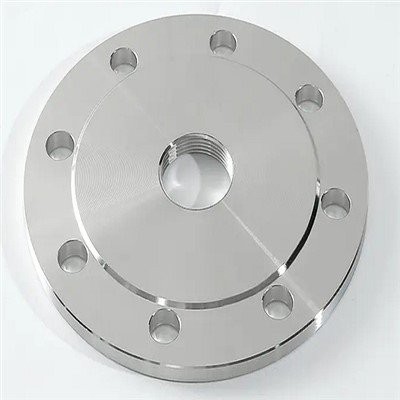

Benefits of Threaded Flange
●Easy assembly:Threaded flange allow for easy assembly and disassembly of piping components, making it easy tomaintain, repair, or replace components without having to disassemble the entire piping system.
●Strength and durability:Threaded flange provide a secure and strong connection between piping components,ensuring that the system can withstand high pressure, temperature, and vibration. They are designed towithstand extreme conditions and are made from materials such as steel, aluminum, or titanium.
●Versatility:Threaded flange are available in various sizes and shapes, making them versatile enough to fit any pipingsystem. This means that they can be used in a wide range of industrial applications, including chemical,
Petroleum, and water treatment plants.
●Cost-effective:Threaded flange are an affordable way to connect piping components. They reduce the need forexpensive welding or threading processes, and their simple design makes them easy to manufacture andinstall.
●Leak prevention:Threaded flange help prevent leaks by providing a tight seal between piping components. This isparticularly important in applications where the fluid being transported is hazardous or corrosive.
What are the Applications of Threaded Flange
Pressure Vessels
The Threaded Flange is used in pressure vessels and tanks that require periodic inspection or maintenance, such as boilers, reactors, distillation columns, and separators.
Chemical Processing
The Threaded Flange is used in chemical plants and refineries that handle corrosive or hazardous materials, such as acids, solvents, caustics, and gases. The Threaded Flange provides a secure and leak-free seal that protects the workers and the environment.
HVAC Systems
The Threaded Flange is used in heating, ventilation and air conditioning (HVAC) systems that require access to ducts, pipes, or air handlers. The Threaded Flange allows for easy installation or removal of sensors, dampers, or filters.
Water and Wastewater Treatment
The Threaded Flange is used in water treatment plants and wastewater treatment facilities that require inspection or maintenance of pumps, valves, or filters. The Threaded Flange provides a cost-effective and reliable solution that reduces downtime and improves efficiency.

●Raised face threaded flange
When the gasket surface area is above the bolted line of the flange, the raised face flange is easily identified. It is compatible with a wide range of gaskets, from flat to semi-metallic and metallic types, either ring or full.
●Rtj threaded flange
The ring joint flange has a circular groove to accommodate the ring joint gasket, which can be used when metal to metal seals are required. Especially in conditions for high pressure and high temperature.
●Male and Female Threaded Flanges
Male threaded flanges feature external threads, while female threaded flanges have internal threads for connection.
●Reducing Threaded Flanges
These flanges allow connection between pipes or fittings of different sizes.
The threaded flange design (also called a 'screwed flange') uses a screw thread to connect the flange to a pipe. A male thread is cut onto a pipe end whilst a female thread is cut into the bore of the flange; the male threaded pipe is then screwed into the female threaded flange.
ASTM A182: The standard for alloy and stainless threaded flanges. Common alloy grades: F5, F9, F11, F22, F91; Stainless steel grades: F304, 304/, F316, F316L.
Process of Threaded Flange
Material Selection: Picking the right flange materials is the first stage in the machining process. The most popular materials for making flanges are alloy steel, carbon steel, or stainless steel. However, the ideal material often depends on the application’s temperature, pressure, and corrosion resistance needs.
Material Cutting and Shaping: Following selection, the material is sliced and formed. Big metal plates are cut into smaller pieces to get the right size for the flange. The produced parts are then heated to the proper temperature to prepare them for further processing.
Heat Treatment: Depending on the material and purpose of a flange, the flanges may undergo heat treatment methods such as annealing, quenching, or tempering. Heat treatment boosts the flange’s mechanical properties while enhancing its resilience, toughness, and resistance to wear and corrosion.
Forming and Forging: The heating process makes the metal components malleable, facilitating the proper flange shape development. Machinists utilize different methods to forge the flange, including hot forging and cold forging. The metal is formed at room temperature in cold forging, while hot forging involves forming heated material/metal under high pressure.
Machining: After the initial cutting and shaping, the flange is machined to achieve precise tolerances and to refine its dimensions. This operation includes facing sealing surfaces, chamfering edges, and drilling holes for bolt connections. CNC (Computer Numerical Control) machines are often used for automated and precision machining.
Surface Finish: Flanges might undergo surface finishing operations like grinding or polishing to achieve the desired smoothness, remove surface defects, and improve their overall look.
Product features of Threaded Flange
Flanges have accurately drilled holes for easy assembly.
They have controlled grain flow for optimal strength and stiffness.
To facilitate good welding, flanges are machined bevels.
For unrestricted flow when used for piping system, flanges are smooth and have accurate bore.
Maintenance Tips for Threaded Flange

01
Regular cleaning
Regular cleaning of the fittings is important to prevent the build-up of dirt, grime, and other contaminants that can lead to corrosion or damage. Use a mild detergent or soap solution and a soft brush or cloth to clean the fittings. Avoid using abrasive cleaners or scrubbers that can scratch the surface of the fittings.

02
Inspect for damage
Regularly inspect the fittings for signs of damage, such as cracks, dents, or corrosion. If any damage is found, replace the fitting immediately to prevent leaks or other issues.

03
Lubrication
Lubricate the threads of the fittings regularly to prevent seizing or galling. Use a high-quality lubricant that is compatible with stainless steel and the type of fluid being transported.

04
Tighten connections
Over time, the connections between fittings can loosen due to thermal expansion or contraction, vibrations, or other factors. Regularly check the connections and tighten them as needed to prevent leaks.
Threaded Flange Performance
Suitable flanges are usually very simple and efficient in their operation. They are convenient and cost-effective in every situation, and the quality of our flanges is excellent. While choosing flanges, make sure they have high-pressure ratings with the capacity to bear extreme temperatures and resist corrosion if necessary.Good flanges are usually made up of copper, carbon, stainless, and other alloys. The quality of these materials should be acceptable according to the actual standards of these alloys.
There are many factors that are responsible for good or bad performance in a flange assembly. A suitable performance flange is very necessary to make the work efficient and easy, so make sure to choose the best flange that meets ASTM standards. The performance of flanges is dependent upon factors like durability, weight, and elasticity of the flange. Moreover, buyers should be more conscious about the weight and material of the flange when this is a factor.
The assembly of a suitable flange to a connection is a factor in their performance, and these are best suitable with the correct pipes, bolting, and torque data.
Differences Between Threaded Flange And Slip on Flange
Construction
Threaded flanges have internal threads that can be screwed onto pipes while slip-on flanges have a flat face without threads. For threaded flanges, the internal threads are typically NPT (National Pipe Thread), BSPP (British Parallel Pipe), or BSPT (British Tapered Pipe) while slip-on flanges do not require threads as they slide over the end of the pipe.
Application
Threaded flanges are commonly used in low-pressure applications whereas slip-on flanges are recommended for high-pressure applications. This is because threaded flanges are less strong than slip-on flanges and may weaken especially when subjected to high pressures. Slip-on flanges attach more easily and are more stable which is beneficial for high-pressure applications.
Assembly
When it comes to assembly, threaded flanges are easier to install. They attach more easily to pipes compared to slip-on flanges which require welding. Threaded flanges are only screwed onto pipes, making them ideal in applications where easy installation and removal are required. On the other hand, slip-on flanges require more work to install and removing them may require dismantling the entire piping system.
Cost
Regarding cost, threaded flanges are more expensive to manufacture than slip-on flanges. This is because threaded flanges require internal threading, adding an extra manufacturing process. On the other hand, slip-on flanges are relatively easy to manufacture since they do not require threading. However, the installation cost of slip-on flanges can be higher than threaded flanges, especially when welding is required.
Leakage
Threaded flanges are prone to leakage if not tightened enough which can result in flange failure. This is because their seal depends on the thread engagement and if the threads need to be properly engaged, the flange may not seal properly. Slip-on flanges, on the other hand, provide a stronger seal since they are welded onto the pipe, reducing the likelihood of leakage.
Key Features of Threaded Flanges
Thread specifications
Threaded flanges are available in various thread types, including standard and custom options. These flanges can be compatible with different thread standards like National Pipe Thread (NPT) or British Standard Pipe (BSP), ensuring compatibility with existing pipelines or equipment.
Material options
Commonly, people use carbon steel and stainless steel to make threaded flanges. The choice of material depends on factors such as the application's environmental conditions and the need for corrosion resistance or high-temperature tolerance. It's essential to select the appropriate material to ensure the longevity and reliability of the threaded flange.
Pressure ratings and sizes
Threaded flanges can handle different pressure and temperature ranges, making them suitable for various industrial applications. They come in multiple sizes to accommodate different pipe dimensions, providing system design and installation flexibility.
Our Factory
Shandong Daye Pipes Co., Ltd. was established in 2006, as a professianl company with combined service covering trade and processing of stainless steel coil, sheet, rod ect, supported by ready stocks to meet requirements of prompt shipment.With years growth, we had achieved strategic cooperation with many stainless steel mills, including TISCO, BAOSTEEL, POSCO(ZPSS) and others prime grade.


FAQ
Q: How do you use a threaded flange?
Q: What are the advantages of threaded flanges?
Q: What is the difference between a flange and a thread?
Q: What is the typical material of a flange?
Q: What type of thread is a threaded flange?
Q: What kind of steel is used for flanges?
Q: How do I identify a flange material?
Q: What is the purpose of threaded in flange?
Q: What is a thread flange?
Q: What is the difference between a companion flange and a threaded flange?
Q: What is the difference between thread type and flange type?
Q: What is the use of flange?
Q: Where is threaded flange used?
Q: What is the function of a threaded flange?
Q: What are the advantages of threaded flanges?
Q: What type of flange is threaded?
Q: What is a threaded companion flange?
Q: Can a flange be threaded?
Q: What is the most commonly used flange?
Q: How is a flange attached to a pipe?
As one of the leading threaded flange manufacturers and suppliers in China, we warmly welcome you to wholesale cheap threaded flange from our factory. All custom made products are with high quality and competitive price. Contact us for more details.
blind tapped flange, Galvanized Pipe NPT Threaded Flange, pipe threaded flange