


304 Stainless Steel Pipe
304 Stainless Steel Pipe is a type of steel pipe that is made from an alloy of iron and chromium. This alloy gives stainless steel its unique properties, including high strength, corrosion resistance, and heat resistance. Other elements such as nickel, molybdenum, and titanium may also be added to enhance these properties.
- Fast Delievery
- Quality Assurance
- 24/7 Customer Service
Product Introduction
Company Profile
Shandong Daye Pipes Co., Ltd. was established in 2006, as a professianl company with combined service covering trade and processing of stainless steel coil, sheet, rod ect, supported by ready stocks to meet requirements of prompt shipment.
We mainly sell stainless steel sheet, pipes, coils, bands, section bars and so on which are applied in decoration, medical industry, food industry, construction industry etc, and have gained gain good feedback and establish mutual trust with our clients.
Why Choose Us
Professional Team
Our cutting-edge facilities and our highly qualified team of professionals allow us to offer the complete range of forged steel flanges and high-spec forged components. Our product line features the highest standards of quality, productivity and reliability.
Quality Control
With years growth, we had achieved strategic cooperation with many stainless steel mills, including TISCO, BAOSTEEL, POSCO(ZPSS) and others prime grade.
Advanced Equipment
We have 2000 square meters of storage and processing center which covered equipment using in slitting, cutting in horizontal, laser cutting, plasma and grinding machine and embossing machine.
Custom Service
A. Stable quality: Coming from good materials and technic
B. Lower price: Not cheapest but the lowest at the same quality
C. Good service: Satisfactory service before and after sale
D. Delivery time: Within 15 days after we get 30% T/T from the buyer
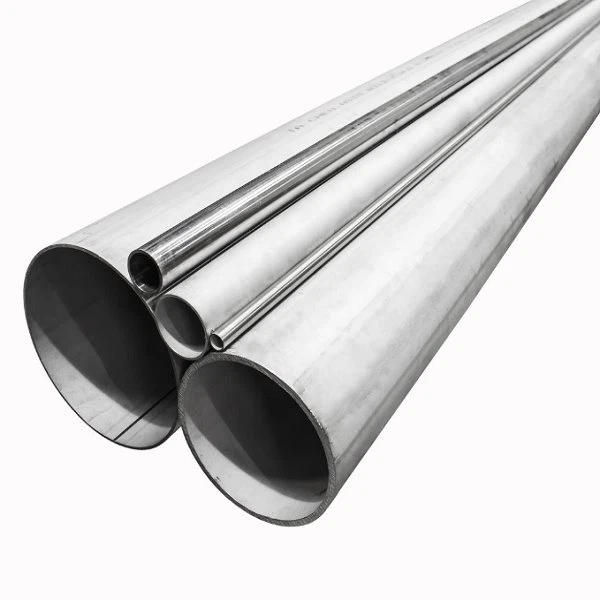
Structural seamless steel pipes (GB/T8162-1999) are seamless steel pipes used for general structures and mechanical structures.

Long service life stainless steel pipe has the longest service life. From the analysis of the application status of stainless steel pipes at home and abroad, the service life of stainless steel pipes will reach 100 years, at least 70 years, as long as the service life of buildings.

304 is equivalent to my country's 0Cr19Ni9 (0cr18Ni9) stainless steel. 304 contains 19% chromium and 9% nickel. 304 is a general-purpose stainless steel that is widely used to make equipment and parts that require good overall performance (corrosion resistance and formability).
What is 304 Stainless Steel Pipe?
304 Stainless Steel Pipe is a type of steel pipe that is made from an alloy of iron and chromium. This alloy gives stainless steel its unique properties, including high strength, corrosion resistance, and heat resistance. Other elements such as nickel, molybdenum, and titanium may also be added to enhance these properties.
304 Stainless Steel Pipe is available in various grades, each with its own unique composition and characteristics.These grades are highly corrosion-resistant and suitable for a wide range of applications.
Benefits of 304 Stainless Steel Pipe
Weldability
One of the best features of Stainless Steel 304 is its ability to be welded easily. When welding thin pieces, there's no need for post-weld annealing, which makes the process simpler. Stainless Steel 304 can achieve excellent welds whether or not filler metals are used. However, if you're welding large sections, post-weld annealing might be necessary to ensure maximum corrosion resistance.
Heating Method
Stainless Steel 304 can be rapidly cooled by heating it to temperatures between 1010 and 1120 degrees Celsius during the analysis process. As compared with some other metals, thermal treatment cannot harden this type of stainless steel. Most important step followed in manufacturing Stainless Steel 304 pipes is heat treatment, which is necessary to enhance their strength and longevity.
Corrosion Resistance
Stainless Steel 304 pipes are well-known for their strong resistance to rust and corrosion. They can handle exposure to moisture, acids, and chemicals, making them ideal for industries like pharmaceuticals, food processing, and chemicals. However, in environments with a lot of chloride (like near the sea), they can develop small holes or cracks, especially if the temperature is above 60°C.
Cold Temperature Strength
SS 304 pipes remain strong and flexible even in extremely cold temperatures. This makes it great for use in freezing environments, like cryogenics and sub-arctic structures, where temperatures can drop as low as -40°C.

Austenitic Stainless Steel Pipes
Grades: 304, 316, 321
Characteristics: Excellent corrosion resistance, good formability, and high toughness. Commonly used in chemical processing, food and beverage industries, and architectural applications.
Ferritic Stainless Steel Pipes
Grades: 430, 409
Characteristics: Good corrosion resistance and magnetic properties. Often used in automotive and industrial applications.
Martensitic Stainless Steel Pipes
Grades: 410, 420
Characteristics: High strength and hardness, moderate corrosion resistance. Used in applications requiring wear resistance, such as cutlery and surgical instruments.
Duplex Stainless Steel Pipes
Grades: 2205, 2507
Characteristics: A combination of austenitic and ferritic properties, providing higher strength and improved resistance to stress corrosion cracking. Used in oil and gas, chemical processing, and marine environments.
Common Uses of 316l Stainless Steel Plate
In the industrial sector, 304 Stainless Steel Pipe are vital for transferring fluids, gases, and chemicals. The oil and gas industry, in particular, relies heavily on these pipes for transporting crude oil, natural gas, and refined products. Their corrosion-resistant properties ensure that the pipes don't degrade or contaminate the materials being transported.
Food and Beverage Industry
Hygiene is a top priority in the food and beverage industry, and 304 Stainless Steel Pipe provide a solution due to their non-reactive properties. They are used in equipment and piping systems that handle food processing, dairy production, and beverage manufacturing. Their smooth surface prevents the buildup of bacteria and ensures easy cleaning and sterilization.
Automotive and Aerospace Industries
In the automotive and aerospace industries, 304 Stainless Steel Pipe are used for exhaust systems, fuel lines, and hydraulic systems. Their heat resistance and ability to endure high pressure make them ideal for critical components that need to perform in extreme conditions.
Chemical and Pharmaceutical Industry
Piping systems in chemical and pharmaceutical industries must meet stringent standards for cleanliness and resistance to corrosive substances. Stainless Steel 304 Pipe is a common choice in these industries due to its ability to resist chemical corrosion while maintaining the purity of the substances being transported. Its smooth surface ensures that no chemicals or contaminants are left behind, making it an excellent option for transporting sensitive materials.
Heat Exchangers
Heat exchangers are crucial components in industries like power generation, refrigeration, and HVAC systems. 304 Stainless Steel Pipe are used in heat exchangers to transfer heat efficiently while withstanding high temperatures and corrosive fluids. Their strength and resistance to thermal stress make them an ideal choice for this application.
Step-by-Step Process of 304 Stainless Steel Pipe Manufacturing
Raw Material Selection
Manufacturers begin by selecting high-quality raw materials. Stainless steel typically contains at least 10.5% chromium, along with iron, carbon, and other elements.
This initial stage is crucial because the raw material quality directly affects the pipe's strength and durability.
Melting and Casting
In this step, stainless steel undergoes melting in an electric arc furnace at extremely high temperatures-usually around 1500°C (2732°F).
Once melted, the steel is cast into semi-finished forms like billets, blooms, or slabs.
Forming
The next step involves forming the stainless steel into the desired shape. For pipes, manufacturers either use the hot extrusion or cold drawing method.
In the hot extrusion method, the billets are heated and forced through a die to form a pipe. Cold drawing involves pulling the steel through a die to reduce its diameter and improve surface finish.
Welding
For welded pipes, the edges of stainless steel strips are brought together and welded using advanced techniques like TIG (Tungsten Inert Gas) welding.
The welding process ensures that the pipes have a uniform, seamless appearance and strong joints.
Heat Treatment
After forming and welding, the 304 Stainless Steel Pipes undergo annealing-a heat treatment process.
Pipes are heated to a certain temperature and then cooled to eliminate internal stresses, enhancing their strength and flexibility.
Pickling and Passivation
304 Stainless Steel Pipes are treated with pickling solutions to remove impurities like oxides and scales that may form during heat treatment.
Passivation ensures the pipe's surface becomes corrosion-resistant, making it suitable for industrial use.
Final Inspection
Every 304 Stainless Steel Pipe undergoes strict quality checks. Inspectors test the pipes for uniformity, wall thickness, surface finish, and strength.Any pipe that doesn't meet these rigorous standards gets discarded or reprocessed.
The application field of 304 stainless steel pipe has become more and more extensive. In our daily life, each of us can come into contact with 304 stainless steel products, but we have less knowledge of the performance of stainless steel pipes and even less understanding of the cleaning and maintenance of stainless steel pipes.
First of all, stainless steel pipe is a kind of building material with corrosion resistance, but it is not rust-proof, but it is more corrosion-resistant than other building materials. The service life of stainless steel pipes can range from 100 years to 70 years. Its high-quality corrosion resistance is due to the passive film on the surface, which allows it to exist in a more stable form in the natural environment. This also shows that the degree of oxidation of stainless steel pipes varies according to the conditions of use and environment, but they will eventually be oxidized. This phenomenon is called corrosion.
Stainless steel cleaning powder is also sold in general stores, which can generally remove black spots and oil stains on the surface of stainless steel pipes. Sprinkle it directly on the dirty surface of the stainless steel pipe, wait 3 minutes, and then rinse with clean water to restore the surface gloss. Generally, cleaning once a month can keep the stainless steel pipe clean. During the cleaning process, it cannot be cleaned with sewage.
In addition, stainless steel pipe products should avoid contact with chloride ions, such as sea water, salt, etc.; during use, pay attention not to contact with acidic substances, such as sulfuric acid, nitric acid, etc.; these are heavy corrosive media, minimize contact pollution to extend the material The expiration date.

In daily life, more and more stainless steel pipe products can be seen everywhere, and the stainless steel pipe materials used are also different. Some are made of 304 material, and some are made of 316 material. People often ask which one is more expensive, 304 stainless steel pipe or 316 stainless steel pipe. In fact, the two are quite similar. It is more expensive than 316.
The density of 304 stainless steel is 7.93g/㎝3, and the density of 316 stainless steel is 8.03g/㎝3. In essence, there is no obvious difference between the two. They are both one of many stainless steels, with the characteristics of acid resistance, alkali resistance, easy processing, and high toughness. But if you divide it more carefully, you can see the difference between the two materials.
First of all, in terms of application, 304 stainless steel pipe has a wide range of uses and has good corrosion resistance. It can be used for anti-theft windows, stair handrails, guardrails, anti-theft doors, car exhaust pipes, medical equipment, etc.
316 adds Ni, Cr, and Mo elements to 304. It has a higher density, better corrosion resistance, and high temperature resistance than 304. Therefore, it is widely used in various industrial fields (seawater equipment, chemicals, dyes , papermaking, oxalic acid, fertilizer and other production equipment).
Secondly, the chemical composition and performance comparison: the chemical name of 304 stainless steel pipe is: 06Cr19Ni10, and the chemical name of 316 stainless steel pipe is: 06Cr17Ni12Mo2. 06 means that the carbon content is less than 0.08, Cr19 means that the chromium content is 19, and NI10 means that the nickel content is 10 . Among them, the element that determines the rust and corrosion resistance of stainless steel pipes is nickel, and its price is also relatively expensive.
Of course, the two have different uses and usage scenarios. When using stainless steel pipes, we choose appropriate stainless steel pipes according to the applicable scenarios. In some places, 316 stainless steel pipes are not necessarily needed. For example, in dry areas in the north, 304 stainless steel pipes are enough. , good corrosion resistance and not easy to rust.
Our Factory
Shandong Daye Pipes Co., Ltd. was established in 2006, as a professianl company with combined service covering trade and processing of stainless steel coil, sheet, rod ect, supported by ready stocks to meet requirements of prompt shipment.With years growth, we had achieved strategic cooperation with many stainless steel mills, including TISCO, BAOSTEEL, POSCO(ZPSS) and others prime grade.


FAQ
Q: Which is better 304 or 316 stainless steel?
A: Most stainless steel ordered around the world is Grade 304. It offers the standard corrosion resistance, formability, strength, and easy maintenance for which stainless is known. While 316 comes in second in terms of quantities sold, it offers vastly superior corrosion resistance to chlorides and acids.
Q: What is 304 stainless steel pipe used for?
A: The steel is common throughout industry particularly in food processing as the material is not susceptible to corrosion from acids found in common foodstuffs. As a consequence, such steel is ideal for items such as sinks, work surfaces, preparation areas and refrigerators.
Q: What exactly is 304 Stainless Steel Pipe, and what is its composition?
A: A 304 Stainless Steel Pipe is an austenitic stainless steel product, consisting primarily of approximately 18% chromium, 8% nickel, and a maximum of 0.08% carbon. These components offer incredible resistance to corrosion and make it ideal for many industrial uses.
Q: How does 304 Stainless Steel Pipe resist corrosion?
A: The chromium oxide layer formed on its surface protects against rust and corrosion, which is why it's widely used in environments vulnerable to water exposure.
Q: How does 304 Stainless Steel Pipe compare to 316L Stainless Steel Pipe?
A: While both have similar properties, 304 has lower molybdenum content, making it less resistant to marine and chemical environments compared to 316L, which is better suited for those conditions.
Q: Up to what temperature can 304 Stainless Steel Pipe operate effectively?
A: It can handle temperatures up to 870°C continuously and up to 980°C intermittently.
Q: Is 304 Stainless Steel Pipe easy to fabricate and weld?
A: Yes, it is readily weldable by all standard methods without needing preheat or post-weld heat treatments.
Q: What are the strength and hardness ratings for 304 Stainless Steel Pipe?
A: It boasts a yield strength of about 205 MPa and a tensile strength ranging from 515 to 620 MPa, with a hardness up to 187 HBW at room temperature.
Q: In which industries is 304 Stainless Steel Pipe predominantly used?
A: It is widely applied in food processing, pharmaceuticals, chemical manufacturing, and construction due to its durability and corrosion resistance.
Q: How should 304 Stainless Steel Pipe be cleaned and maintained?
A: Regular cleaning with mild detergents and avoiding chloride contamination ensures it remains corrosion-free and retains its aesthetic appeal.
Q: What is the environmental impact of using 304 Stainless Steel Pipe?
A: It is fully recyclable without loss of properties, reducing waste and supporting sustainable practices.
Q: Can 304 Stainless Steel Pipe be recycled?
A: Absolutely, it can be recycled multiple times without degradation, contributing significantly to sustainability.
Q: How should 304 Stainless Steel Pipe be disposed of properly?
A: Recycling is encouraged, and when not possible, disposal should adhere to local regulations concerning metal waste.
Q: What finishing options are available for 304 Stainless Steel Pipe?
A: Polishing, brushing, bead blasting, and other methods can be used to achieve desired finishes.
Q: What safety measures should be taken when handling 304 Stainless Steel Pipe?
A: Proper PPE is essential, especially during cutting and welding, to prevent injury.
Q: How should 304 Stainless Steel Pipe be stored?
A: Store in dry areas, away from corrosive agents to prevent damage.
Q: Where can one purchase 304 Stainless Steel Pipe?
A: Metal suppliers, distributors, and manufacturers specializing in stainless steel products are your best sources.
Q: Can 304 Stainless Steel Pipe be customized?
A: Yes, it can be cut, bent, and shaped as per specific requirements, offering flexibility in design and application.
Q: What kind of customer support is available for 304 Stainless Steel Pipe?
A: Suppliers often provide technical assistance, advice on product selection, and post-purchase support to ensure satisfaction and appropriate use.
Hot Tags: 304 stainless steel pipe, China 304 stainless steel pipe manufacturers, suppliers, factory, ss 304 pipe fittings, 1 inch stainless pipe, stainless steel for water pipes, 2in stainless pipe, stainless steel monkey bars, 25mm stainless steel tube fittings
No Information


