

What is the post - welding heat treatment for Ss316 Plate?
Jan 12, 2026
As a reliable supplier of SS316 plates, I've had numerous inquiries regarding post - welding heat treatment for these plates. In this blog, I'll delve into what post - welding heat treatment for SS316 plates is, why it's important, and the different processes involved.
What is SS316 Plate?
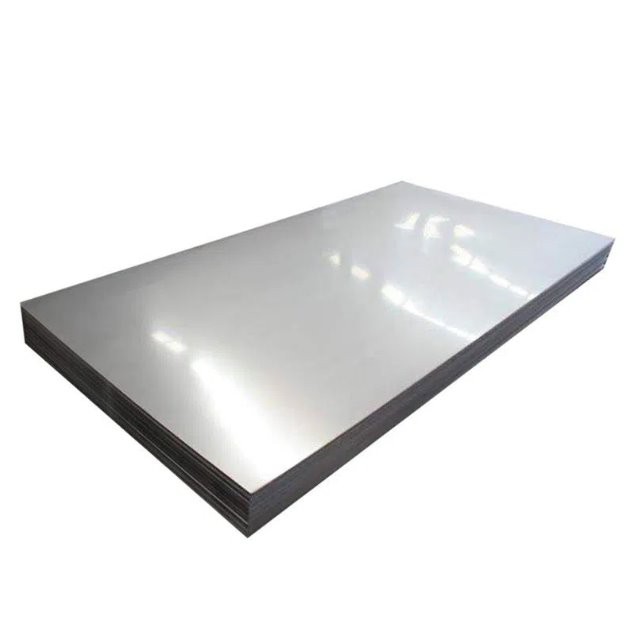
Before discussing post - welding heat treatment, let's briefly understand SS316 plates. SS316 is an austenitic stainless steel alloy with excellent corrosion resistance, particularly in chloride - rich environments. It contains chromium, nickel, and molybdenum. The addition of molybdenum enhances its resistance to pitting and crevice corrosion, making it suitable for various applications such as marine equipment, chemical processing plants, and architectural structures. If you're interested in our sheet metal options, you can check out Stainless Steel Sheet Metal 4x8.
Why is Post - Welding Heat Treatment Necessary?
During the welding process, the heat input causes changes in the microstructure of the SS316 plate. These changes can lead to several issues:
- Residual Stress: Welding generates high - levels of residual stress in the heat - affected zone (HAZ) and the weld itself. These residual stresses can reduce the fatigue life of the welded structure and may also cause cracking over time, especially under cyclic loading or in the presence of corrosive media.
- Microstructural Changes: The rapid heating and cooling during welding can result in the formation of undesirable microstructures such as martensite in the HAZ. This can affect the mechanical properties of the plate, like reducing its ductility and toughness.
- Sensitization: In some cases, welding can cause sensitization, which is the precipitation of chromium carbides at the grain boundaries. This depletes chromium in the vicinity of the grain boundaries, making the material more susceptible to intergranular corrosion.
Post - welding heat treatment helps to address these problems by relieving residual stresses, restoring the microstructure, and improving the overall performance and durability of the welded SS316 plate.
Types of Post - Welding Heat Treatment for SS316 Plates
Stress Relieving
Stress relieving is one of the most common post - welding heat treatment methods for SS316 plates. It involves heating the welded plate to a specific temperature range (usually between 550 - 650°C for SS316) and holding it at that temperature for a certain period, followed by slow cooling.
- Benefits: By heating the plate, the internal stresses are reduced as the material undergoes some plastic deformation at elevated temperatures. Slow cooling prevents the re - introduction of new stresses. This treatment improves the dimensional stability of the welded component and enhances its resistance to stress - corrosion cracking.
- Process: The plate is placed in a furnace, and the temperature is gradually increased to the setpoint. The holding time depends on the thickness of the plate; generally, a thicker plate requires a longer holding time. After the holding period, the furnace is turned off, and the plate is allowed to cool slowly inside.
Solution Annealing
Solution annealing is a more comprehensive heat treatment process. It involves heating the SS316 plate to a high temperature (around 1050 - 1100°C), holding it there long enough for all the carbides to dissolve into the austenitic matrix, and then quenching it rapidly.
- Benefits: This treatment completely eliminates sensitization by redissolving the chromium carbides precipitated during welding. It also restores the original austenitic microstructure of the SS316, improving its corrosion resistance and mechanical properties, such as ductility and toughness.
- Process: The plate is placed in a furnace pre - heated to the annealing temperature. Once the plate reaches the required temperature, it is held for a specific time (usually 1 - 2 hours, depending on the thickness). After the holding time, the plate is quickly removed from the furnace and quenched in water or a suitable quenching medium to prevent the re - precipitation of carbides.
Factors Affecting Post - Welding Heat Treatment
Several factors need to be considered when performing post - welding heat treatment on SS316 plates:
- Plate Thickness: Thicker plates require longer heating and holding times to ensure uniform heat distribution throughout the material. For example, 10mm Stainless Steel Plate may need a different heat treatment schedule compared to a thinner plate.
- Welding Process: Different welding processes (such as TIG, MIG, or stick welding) can produce different heat - affected zones and residual stress distributions. The heat treatment parameters may need to be adjusted accordingly.
- Application Requirements: The end - use of the welded component also plays a role. If the component will be exposed to highly corrosive environments or cyclic loading, a more rigorous heat treatment process may be required.
Quality Control in Post - Welding Heat Treatment
To ensure the effectiveness of post - welding heat treatment, proper quality control measures should be implemented:
- Temperature Monitoring: Use calibrated thermocouples to accurately measure the temperature during the heat treatment process. This ensures that the plate is heated to the correct temperature and held within the specified range.
- Microstructural Analysis: After heat treatment, a sample of the welded area can be analyzed using microscopy to confirm the restoration of the desired microstructure.
- Non - destructive Testing: Methods such as ultrasonic testing or magnetic particle testing can be used to detect any internal defects or cracks that may have occurred during the heat treatment.
Our Offerings
As a trusted SS316 plate supplier, we not only provide high - quality 316l Stainless Steel Plate but also offer professional advice on post - welding heat treatment. Our team of experts can help you determine the most suitable heat treatment process based on your specific requirements, whether it's for a small - scale project or a large - scale industrial application.
If you're planning to purchase SS316 plates or need further information on post - welding heat treatment, don't hesitate to get in touch. We're here to assist you in making the best selection and ensuring the long - term performance of your welded components.

References
- ASM Handbook, Volume 4: Heat Treating, ASM International
- Welding Metallurgy and Weldability of Stainless Steels, John C. Lippold and David J. Kotecki
- Stainless Steel: A Reference Book, Leonard I. Rotman