

What are the disadvantages of flat face flanges?
Aug 15, 2025
Hey there! I'm a supplier of Flat Face Flanges, and while I'm super proud of the products we offer, I also know that it's important to be honest about their drawbacks. In this blog post, I'll be diving into the disadvantages of flat face flanges. This way, you can make an informed decision when it comes to choosing the right flange for your project.
1. Sealing Issues
One of the most significant disadvantages of flat face flanges is their sealing capabilities. Flat face flanges rely on a flat gasket to create a seal between two mating surfaces. While this works well in low-pressure and low-temperature applications, it can be a problem in more demanding situations.
In high-pressure systems, the flat gasket can get squeezed out from between the flanges. The pressure forces the gasket to deform and move, which can lead to leaks. Unlike raised face flanges that have a raised surface to contain the gasket, flat face flanges don't have this feature. This lack of containment makes it easier for the gasket to shift and fail.
For example, in an industrial pipeline carrying high-pressure steam, a flat face flange might not be able to maintain a proper seal. The high temperature and pressure can cause the gasket to break down and leak over time. This not only leads to loss of the transported medium but can also be a safety hazard.
2. Limited Resistance to Vibration
Flat face flanges aren't great at handling vibration. In applications where there's a lot of vibration, such as in machinery or pipelines connected to engines, the flat face design can cause problems.
Vibration can cause the bolts holding the flanges together to loosen. Without a proper locking mechanism or a design that can withstand vibration, the flanges can start to separate slightly. This separation can then lead to leaks as the gasket is no longer compressed evenly.
Imagine a pump system that generates a lot of vibration during operation. If flat face flanges are used to connect the pipes to the pump, the constant shaking can gradually loosen the bolts. As the bolts loosen, the seal between the flanges weakens, and there's a risk of fluid leakage.
3. Not Ideal for High-Temperature Applications
High temperatures can be a real challenge for flat face flanges. The materials used in flat face flanges and their gaskets can expand and contract with changes in temperature. In high-temperature applications, this expansion and contraction can be more pronounced.
The flat gasket used in flat face flanges may not be able to handle the thermal stress. It can become brittle or lose its elasticity, which affects its sealing ability. Additionally, the flange itself can warp or deform under high temperatures, further compromising the seal.
For instance, in a furnace or a high-temperature chemical processing plant, the extreme heat can cause the flat face flange to distort. This distortion can prevent the gasket from making a proper seal, leading to leaks of hot gases or chemicals.
4. Installation Challenges
Installing flat face flanges can be a bit tricky. Getting the two mating flanges perfectly aligned is crucial for a proper seal. If the flanges are even slightly misaligned, the gasket won't be compressed evenly, and there's a high chance of leakage.
Aligning flat face flanges requires precise measurements and careful positioning. This can be time-consuming, especially in large-scale projects where multiple flanges need to be installed. Moreover, during the installation process, the flat gasket needs to be placed correctly. Any wrinkles or misalignments in the gasket can also lead to sealing issues.
For example, when installing a pipeline system with multiple flat face flanges, the workers need to ensure that each flange pair is aligned precisely. This might involve using special tools and taking extra time to double-check the alignment, which can increase the overall installation cost.
5. Compatibility Issues
Flat face flanges may not be compatible with all types of systems or equipment. Some industries or specific applications may require a different type of flange design for better performance.
For example, in the oil and gas industry, where safety and reliability are of utmost importance, raised face flanges are often preferred over flat face flanges. Raised face flanges provide a better seal and are more suitable for high-pressure and high-temperature applications.

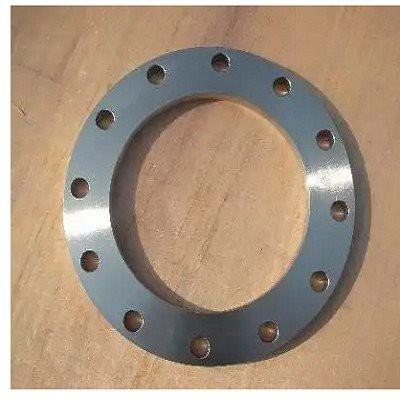
If you're working on a project that requires compliance with certain industry standards, flat face flanges may not meet those requirements. This can limit their use in specific sectors and may force you to look for alternative flange designs.
Our Products Despite the Disadvantages
Even though flat face flanges have these disadvantages, they still have their place in many applications. We offer a wide range of flat face flanges, including the Sliding Sleeve Flat Flange 8 Hole and the Stainless Steel 304 Flat Flange. These products are made with high-quality materials and are suitable for low-pressure and low-temperature applications where their disadvantages are less of a concern.
If you're interested in learning more about our Flat Face Flange products or have any questions about which flange is right for your project, don't hesitate to reach out. We're here to help you make the best decision for your needs. Whether you're a small business or a large industrial operation, we can provide you with the right flanges and offer expert advice.
In conclusion, while flat face flanges have their drawbacks, they can still be a viable option depending on your specific requirements. By understanding their limitations, you can make an informed choice and ensure the success of your project.
References
- Pipe Flanges and Flanged Fittings: Handbook for Design and Engineering by E. B. Manbeck
- ASME B16.5 - Pipe Flanges and Flanged Fittings Standard