The Difference Between Cold Forging And Hot Forging Of Flanges
Jun 10, 2022
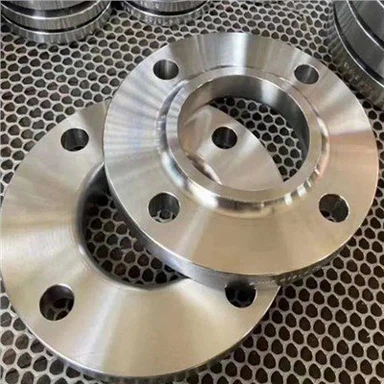
Let's talk about the necessary industrial components for pipe flanges. Flanges are attachments between connecting pipes and pipes. How to make a flange? Which hot and cold forgings are often mentioned?
What is the hot forging of flange? Is it traditionally understood as heating? Fire lap flange? In the industrial field, the lap flange hot forging has low forming energy and strong deformation resistance, and can process large flanges with complex shapes. Therefore, if you want to manufacture flanges with high dimensional accuracy, hot forging can be performed in the temperature range of 900≤1000℃, which is strictly enforced. In addition, attention should also be paid to improving the working environment of hot forgings. Compared with lap flange molds in other temperature areas, the service life of lap flange molds is also different, but its wide range of use and low cost have always been loved by people.
The cold forging of the flange is that when the temperature of the lap flange is low, the size of the flange will change slightly. What is the temperature? Forged at 700°C or lower, the dimensions are small, and we can observe no decarburization of the surface. Therefore, as long as the control range is reasonable, cold forging can easily obtain good dimensional accuracy and surface finish. Both temperature and lubrication are well done. Warm forging below 700°C can also achieve better accuracy. For cold forged materials below the recrystallization temperature, the lap flange forming process is lower than the predetermined temperature. Analysis shows that cold-forged materials have higher deformation resistance at room temperature and can sometimes replace cold-worked chips. Cold forging strengthens the metal and increases flange strength. Often, high value-added products use cold forging to reduce production costs, and can also be combined with these processes to form composite processes.