

What is the effect of welding current on Socket Welding Flange?
Jul 18, 2025
As a supplier of Socket Welding Flanges, I've witnessed firsthand the critical role that welding current plays in the production and performance of these essential components. In this blog post, I'll delve into the effects of welding current on Socket Welding Flanges, sharing insights based on my years of experience in the industry.
Understanding Socket Welding Flanges
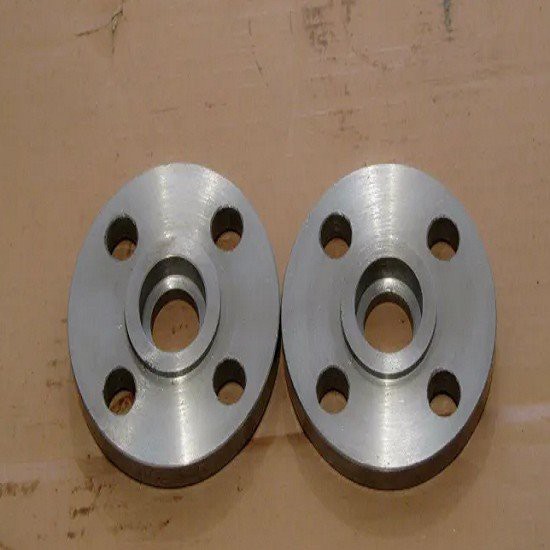
Socket Welding Flanges are widely used in piping systems to connect pipes, valves, and other equipment. They feature a socket into which the pipe is inserted and then welded around the perimeter. This type of flange is favored for its simplicity, strength, and ability to provide a leak-tight joint. Common materials for Socket Welding Flanges include stainless steel grades such as 304, 316, and 321. You can find a wide range of 304 316 321 Socket Welding Flange on our website.
The Role of Welding Current
Welding current is one of the most important parameters in the welding process. It determines the amount of heat generated at the weld joint, which in turn affects the penetration, fusion, and overall quality of the weld. When welding Socket Welding Flanges, the right welding current is crucial for achieving a strong and durable joint.
Penetration
Penetration refers to the depth to which the weld metal fuses with the base metal. A proper welding current is necessary to ensure adequate penetration. If the current is too low, the weld may not penetrate deeply enough, resulting in a weak joint that is prone to failure. On the other hand, if the current is too high, excessive penetration can occur, leading to burn-through and distortion of the flange.
For example, when welding a 304 316 321 Socket Welding Flange, a current that is too low may cause the weld to only bond to the surface of the pipe, leaving the interior of the joint weak. This can lead to leaks and reduced structural integrity over time.
Fusion
Fusion is the process by which the weld metal and the base metal melt and mix together to form a solid bond. The welding current affects the rate of fusion. A higher current generally leads to faster fusion, but it also increases the risk of overheating and other welding defects.
In the case of Socket Welding Flanges, proper fusion is essential for creating a homogeneous and strong joint. Insufficient fusion can result in lack of fusion defects, where the weld metal does not fully bond with the base metal. This can compromise the integrity of the joint and make it more susceptible to corrosion and mechanical stress.
Weld Bead Shape
The welding current also influences the shape of the weld bead. A well-shaped weld bead is smooth, uniform, and free of defects. When the current is appropriate, the weld bead will have a good profile, with a proper width and height.
If the current is too low, the weld bead may be narrow and irregular, with poor wetting of the base metal. Conversely, a high current can cause the weld bead to be wide and convex, which may require additional grinding and finishing to achieve the desired appearance and functionality.
Effects of Incorrect Welding Current
Using the wrong welding current can have several negative effects on Socket Welding Flanges.
Porosity
Porosity is a common welding defect characterized by small holes or voids in the weld metal. It can be caused by a variety of factors, including incorrect welding current. When the current is too low, the weld pool may not be hot enough to allow gas bubbles to escape, resulting in porosity.
Porosity weakens the weld joint and can lead to corrosion and fatigue failure. In applications where the flange is exposed to high pressures or corrosive environments, porosity can significantly reduce the service life of the component.
Cracking
Cracking is another serious issue that can occur due to incorrect welding current. High currents can cause rapid heating and cooling of the weld metal, leading to thermal stresses that can result in cracking. This is especially true for materials with high carbon content or those that are prone to hardening.
Cracks in a Socket Welding Flange can compromise its structural integrity and pose a safety hazard. They can also lead to leaks and costly repairs or replacements.
Distortion
Excessive welding current can cause the flange to distort. The heat generated during welding can cause the metal to expand and contract unevenly, leading to warping and misalignment. This can make it difficult to install the flange correctly and may require additional machining or adjustment.
Distortion can also affect the fit and function of the piping system, potentially leading to leaks and reduced performance.
Determining the Optimal Welding Current
To achieve the best results when welding Socket Welding Flanges, it's important to determine the optimal welding current. This depends on several factors, including the type of material, the thickness of the flange and pipe, the welding process, and the electrode or filler metal used.

Material Type
Different materials have different melting points and thermal conductivity, which affect the welding current requirements. For example, stainless steel has a higher melting point than carbon steel, so it generally requires a higher welding current.
When welding Stainless Steel SW Socket-welding Flange, it's important to select a welding current that is appropriate for the specific grade of stainless steel. This ensures proper fusion and penetration without causing excessive heat input.
Thickness
The thickness of the flange and the pipe also plays a role in determining the welding current. Thicker materials generally require higher currents to achieve adequate penetration. However, it's important to balance the need for penetration with the risk of overheating and distortion.
For example, when welding a thick-walled Socket Welding Flange, a higher current may be necessary to ensure that the weld penetrates through the entire thickness of the joint. But if the current is too high, it can cause the flange to overheat and warp.
Welding Process
There are several welding processes available for welding Socket Welding Flanges, such as shielded metal arc welding (SMAW), gas tungsten arc welding (GTAW), and gas metal arc welding (GMAW). Each process has its own optimal current range.
For instance, SMAW typically requires a higher current compared to GTAW. Understanding the characteristics of the welding process and selecting the appropriate current is essential for achieving high-quality welds.
Conclusion
In conclusion, the welding current has a significant impact on the quality and performance of Socket Welding Flanges. Proper control of the welding current is essential for achieving adequate penetration, fusion, and a well-shaped weld bead. Incorrect welding current can lead to a variety of welding defects, including porosity, cracking, and distortion, which can compromise the integrity of the flange and the entire piping system.
As a supplier of Socket Welding Flanges, we understand the importance of using the right welding parameters to ensure the highest quality products. We offer a wide range of 304 316 321 Socket Welding Flange and Stainless Steel SW Socket-welding Flange that are manufactured to meet the highest industry standards.
If you're in the market for Socket Welding Flanges or have any questions about the welding process, we encourage you to contact us for more information and to discuss your specific requirements. Our team of experts is ready to assist you in finding the right solutions for your applications.
References
- Welding Handbook, American Welding Society
- ASME Boiler and Pressure Vessel Code
- AWS D1.1 Structural Welding Code - Steel