

What is the difference between Socket Welding Flange for small - diameter and large - diameter pipelines?
Nov 17, 2025
When it comes to pipeline systems, socket welding flanges play a crucial role in ensuring a secure and reliable connection. As a socket welding flange supplier, I've witnessed firsthand the diverse requirements of different pipeline diameters. In this blog, I'll delve into the differences between socket welding flanges for small - diameter and large - diameter pipelines.
Design and Structure
One of the most apparent differences between socket welding flanges for small and large diameters lies in their design and structure. Small - diameter socket welding flanges are typically more compact. Their size allows for a relatively simple and straightforward design. The bore of the flange, which is the inner opening where the pipe fits, is smaller. This means that the welding area is also less extensive compared to large - diameter flanges.
For small - diameter flanges, the thickness of the flange itself may be thinner. This is because the pressure and stress exerted on small - diameter pipelines are generally lower. The reduced thickness helps in cost - effectiveness and makes the flange lighter, which can be an advantage in applications where weight is a concern, such as in some aerospace or small - scale industrial setups.
On the other hand, large - diameter socket welding flanges are more substantial in size. The bore is significantly larger to accommodate the large - diameter pipes. The increased size also means that the welding area is much larger. To withstand the higher pressure and stress that large - diameter pipelines often encounter, these flanges are usually thicker. A thicker flange provides more strength and stability, preventing leaks and failures under high - pressure conditions.
Material Requirements
The material requirements for socket welding flanges vary depending on the pipeline diameter. Small - diameter pipelines may not require the same level of high - strength materials as large - diameter ones. For small - diameter socket welding flanges, common materials like carbon steel or some lower - grade stainless steels may be sufficient. These materials are cost - effective and can meet the performance requirements of small - scale applications.
However, large - diameter pipelines often operate under more demanding conditions, such as high pressure, high temperature, or in corrosive environments. As a result, large - diameter socket welding flanges typically require higher - grade materials. Stainless steels like 304, 316, and 321 are commonly used for their excellent corrosion resistance and strength. You can find a wide range of 304 316 321 Socket Welding Flange on our website, which are suitable for large - diameter pipelines in various industries.
In addition, large - diameter flanges may also be made from alloy steels or other specialized materials. These materials offer enhanced mechanical properties, such as higher tensile strength and better resistance to creep at elevated temperatures. Our 304 316 321 Socket Welding Flange are manufactured in our factory with strict quality control to ensure they meet the high - standard requirements of large - diameter pipeline applications.
Welding Process
The welding process for small - diameter and large - diameter socket welding flanges also differs. For small - diameter flanges, the welding is generally easier and quicker. The smaller welding area means that less filler material is required, and the heat input can be more precisely controlled. This allows for a more efficient welding process, reducing the overall production time.
In small - diameter flange welding, techniques like TIG (Tungsten Inert Gas) welding may be commonly used. TIG welding provides a high - quality weld with good control over the heat and filler material. It is suitable for small - scale operations where precision is crucial.

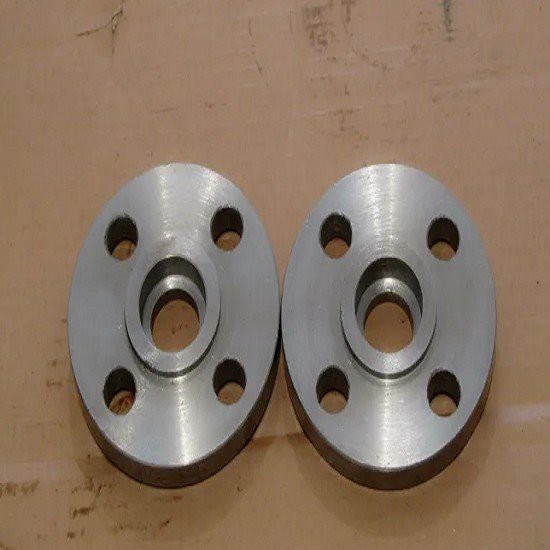
In contrast, welding large - diameter socket welding flanges is more complex. The larger welding area requires more filler material, and the heat input needs to be carefully managed to avoid issues such as distortion or uneven welding. Multi - pass welding is often necessary to ensure a complete and strong weld.
Large - diameter flange welding may involve processes like SMAW (Shielded Metal Arc Welding) or SAW (Submerged Arc Welding). SMAW is a versatile process that can be used in various environments, while SAW is known for its high - deposition rate, which is beneficial for large - scale welding jobs. Our High Pressure Stainless Steel Sw Flange are welded using advanced techniques to ensure the highest quality and reliability for large - diameter pipeline applications.
Installation and Handling
Installation and handling of socket welding flanges vary based on the pipeline diameter. Small - diameter flanges are easier to handle due to their lighter weight. They can be more easily maneuvered during installation, which reduces the labor requirements and the risk of injury. In addition, small - diameter flanges can often be installed in tight spaces where large - diameter flanges would not fit.
Large - diameter socket welding flanges, however, require more specialized handling equipment. Their heavy weight and large size make them difficult to move manually. Cranes or other lifting devices are usually needed for installation. Moreover, the installation of large - diameter flanges requires more precise alignment to ensure a proper fit and a leak - free connection. This may involve the use of alignment tools and additional labor to achieve the correct positioning.
Cost Considerations
Cost is an important factor in any pipeline project. Small - diameter socket welding flanges are generally more cost - effective. Their smaller size and the use of less expensive materials result in lower production costs. In addition, the easier welding process and simpler installation requirements also contribute to cost savings.
Large - diameter socket welding flanges, on the other hand, are more expensive. The higher - grade materials, larger size, and more complex manufacturing and installation processes all add to the cost. However, it's important to note that in large - diameter pipeline projects, the cost of the flange is often a relatively small part of the overall project cost. The reliability and performance of the flange are crucial to prevent costly downtime and repairs in the long run.
Application Scenarios
Small - diameter socket welding flanges are commonly used in applications where space is limited and the flow rate is relatively low. They are often found in plumbing systems, small - scale chemical processing plants, and some laboratory setups. Their compact size and cost - effectiveness make them ideal for these applications.
Large - diameter socket welding flanges are used in high - flow, high - pressure applications. They are commonly found in oil and gas pipelines, power plants, and large - scale industrial processes. These applications require the strength and reliability that large - diameter flanges can provide to ensure the safe and efficient operation of the pipeline system.
Conclusion
In conclusion, there are significant differences between socket welding flanges for small - diameter and large - diameter pipelines. These differences span from design and material requirements to welding processes, installation, cost, and application scenarios. As a socket welding flange supplier, we understand the unique needs of each pipeline diameter and can provide high - quality flanges tailored to specific requirements.
If you are in the market for socket welding flanges, whether for small - diameter or large - diameter pipelines, we invite you to contact us for procurement and to discuss your specific needs. Our team of experts is ready to assist you in selecting the right flanges for your project.
References
- ASME B16.5 - Pipe Flanges and Flanged Fittings
- API 6A - Specification for Wellhead and Christmas Tree Equipment
- ASTM A182 - Standard Specification for Forged or Rolled Alloy and Stainless Steel Pipe Flanges, Forged Fittings, and Valves and Parts for High - Temperature Service