

What is the difference between a raised face and a flat face blind flange?
Aug 01, 2025
In the world of industrial piping systems, blind flanges play a crucial role. As a seasoned blind flange supplier, I've encountered numerous inquiries regarding the differences between raised face and flat face blind flanges. Understanding these differences is essential for making informed decisions when selecting the appropriate flange for your specific application. In this blog post, I'll delve into the details of raised face and flat face blind flanges, highlighting their unique characteristics, applications, and advantages.
What is a Blind Flange?
Before we dive into the differences between raised face and flat face blind flanges, let's first understand what a blind flange is. A blind flange is a type of flange that is used to close the end of a pipe, valve, or vessel. It is a solid disk with bolt holes around the perimeter, which allows it to be bolted onto the end of a pipe or other equipment. Blind flanges are commonly used in piping systems to isolate sections of the pipeline, perform maintenance or inspection, or to prevent the flow of fluids or gases.
Raised Face Blind Flange
A raised face blind flange, as the name suggests, has a raised surface around the center of the flange. This raised surface, known as the raised face, provides a sealing surface for the gasket. The raised face is typically between 1/16 inch and 1/4 inch in height, depending on the size and pressure rating of the flange.
Characteristics
- Sealing Performance: The raised face provides a larger sealing surface area, which helps to improve the sealing performance of the flange. This is especially important in high-pressure and high-temperature applications, where a reliable seal is essential to prevent leaks.
- Gasket Compression: The raised face helps to compress the gasket evenly, ensuring a tight seal. This reduces the risk of gasket failure and extends the service life of the gasket.
- Alignment: The raised face also helps to align the flange during installation, making it easier to bolt the flange onto the pipe or other equipment.
Applications
- High-Pressure Systems: Raised face blind flanges are commonly used in high-pressure piping systems, such as those found in oil and gas, chemical, and power generation industries.
- High-Temperature Systems: They are also suitable for high-temperature applications, where the sealing performance of the flange is critical.
- Critical Applications: Raised face blind flanges are often used in critical applications where a leak could have serious consequences, such as in nuclear power plants or pharmaceutical manufacturing facilities.
Advantages
- Reliable Sealing: The raised face provides a reliable seal, even in high-pressure and high-temperature applications.
- Long Service Life: The improved sealing performance and gasket compression help to extend the service life of the flange and gasket.
- Easy Installation: The raised face helps to align the flange during installation, making it easier to install and reducing the risk of installation errors.
Flat Face Blind Flange
A flat face blind flange, on the other hand, has a flat surface across the entire face of the flange. There is no raised surface around the center of the flange.
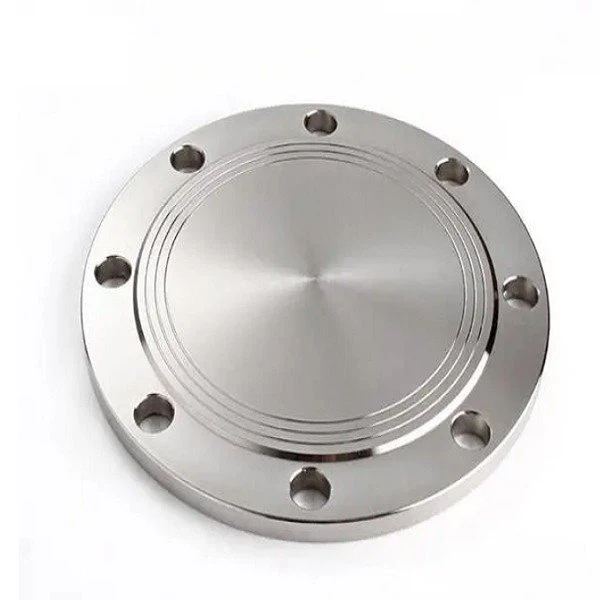

Characteristics
- Sealing Performance: The flat face provides a smaller sealing surface area compared to the raised face, which can make it more challenging to achieve a reliable seal. However, with the use of a suitable gasket, a flat face blind flange can still provide an adequate seal in many applications.
- Gasket Compression: The flat face requires a different type of gasket compared to the raised face. The gasket used with a flat face blind flange is typically a full-face gasket, which covers the entire surface of the flange. This helps to distribute the gasket compression evenly and improve the sealing performance.
- Alignment: The flat face does not provide any alignment assistance during installation, which can make it more difficult to align the flange and bolt it onto the pipe or other equipment.
Applications
- Low-Pressure Systems: Flat face blind flanges are commonly used in low-pressure piping systems, such as those found in water supply, HVAC, and plumbing applications.
- Non-Critical Applications: They are also suitable for non-critical applications where a leak would not have serious consequences, such as in residential or commercial buildings.
Advantages
- Cost-Effective: Flat face blind flanges are generally less expensive than raised face blind flanges, making them a cost-effective option for low-pressure and non-critical applications.
- Simple Design: The flat face design is simpler than the raised face design, which can make it easier to manufacture and install.
Comparison between Raised Face and Flat Face Blind Flanges
Now that we've discussed the characteristics, applications, and advantages of raised face and flat face blind flanges, let's compare them side by side.
| Feature | Raised Face Blind Flange | Flat Face Blind Flange |
|---|---|---|
| Sealing Surface | Raised surface around the center of the flange | Flat surface across the entire face of the flange |
| Sealing Performance | Better sealing performance, especially in high-pressure and high-temperature applications | Adequate sealing performance in low-pressure applications |
| Gasket Type | Ring gasket | Full-face gasket |
| Gasket Compression | Even gasket compression | Requires proper gasket selection and installation to ensure even compression |
| Alignment | Helps to align the flange during installation | Does not provide alignment assistance |
| Cost | Generally more expensive | Generally less expensive |
| Applications | High-pressure and high-temperature systems, critical applications | Low-pressure systems, non-critical applications |
Which One to Choose?
The choice between a raised face and a flat face blind flange depends on several factors, including the pressure and temperature of the application, the type of fluid or gas being transported, and the criticality of the application.
- High-Pressure and High-Temperature Applications: If you are working with a high-pressure and high-temperature application, a raised face blind flange is the recommended choice. The raised face provides a larger sealing surface area and better gasket compression, which helps to ensure a reliable seal.
- Low-Pressure Applications: For low-pressure applications, a flat face blind flange may be a suitable option. It is less expensive and can provide an adequate seal with the use of a suitable gasket.
- Critical Applications: In critical applications where a leak could have serious consequences, a raised face blind flange is the preferred choice. The reliable sealing performance of the raised face helps to minimize the risk of leaks and ensure the safety of the system.
Our Products
As a leading Pipe Blind Flange supplier, we offer a wide range of blind flanges, including Slip Blind and Stainless Steel Forged RF Blind Flange. Our flanges are manufactured to the highest quality standards and are available in a variety of sizes, materials, and pressure ratings to meet your specific requirements.
Whether you need a raised face or a flat face blind flange, we have the expertise and experience to help you select the right flange for your application. Our team of experts can provide you with technical support and guidance to ensure that you make the best decision for your project.
Contact Us
If you are interested in purchasing blind flanges or have any questions about our products, please feel free to contact us. We would be happy to discuss your requirements and provide you with a quote. Our team is dedicated to providing you with the best possible service and support, and we look forward to working with you.
References
- ASME B16.5 - Pipe Flanges and Flanged Fittings
- API 6A - Specification for Wellhead and Christmas Tree Equipment
- ISO 7005 - Metallic Flanges for Pipework