

How to estimate the weight of a stainless steel bar?
Jul 14, 2025
Estimating the weight of a stainless steel bar is a crucial skill, especially for those in the construction, manufacturing, and engineering industries. As a supplier of stainless steel bars, I understand the importance of accurate weight estimation. It helps in planning projects, determining shipping costs, and ensuring the proper handling of materials. In this blog post, I will share some methods and formulas to estimate the weight of a stainless steel bar effectively.
Understanding the Basics of Stainless Steel Bars
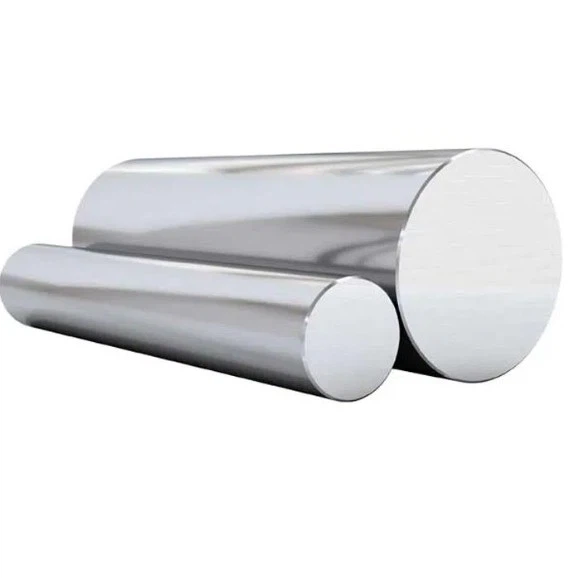
Before we dive into the weight estimation, let's briefly understand the types of stainless steel bars available. We offer a wide range of stainless steel bars, including 316 Stainless Steel Round Bar, Stainless Round Bar, and Ss Bar. Each type has its unique properties and applications. For example, 316 stainless steel is known for its excellent corrosion resistance, making it suitable for marine and chemical environments.
Factors Affecting the Weight of Stainless Steel Bars
The weight of a stainless steel bar depends on several factors:
- Material Density: Different grades of stainless steel have different densities. For example, the density of 304 stainless steel is approximately 7.93 g/cm³, while 316 stainless steel has a density of about 7.98 g/cm³.
- Bar Dimensions: The length, diameter (for round bars), width, and thickness (for flat bars) play a significant role in determining the weight. The larger the dimensions, the heavier the bar.
- Shape: Stainless steel bars come in various shapes, such as round, square, rectangular, and hexagonal. Each shape has a different cross - sectional area, which affects the weight.
Weight Estimation Formulas for Different Shapes of Stainless Steel Bars
Round Bars
The formula to calculate the weight of a round stainless steel bar is:
[W=\pi\times\left(\frac{d}{2}\right)^2\times L\times\rho]
where:
- (W) is the weight of the bar (in grams)
- (d) is the diameter of the bar (in centimeters)
- (L) is the length of the bar (in centimeters)
- (\rho) is the density of the stainless steel (in g/cm³)
Let's take an example. Suppose we have a 316 stainless steel round bar with a diameter of 5 cm and a length of 100 cm. The density of 316 stainless steel (\rho = 7.98\ g/cm³).
First, calculate the cross - sectional area (A=\pi\times\left(\frac{d}{2}\right)^2=\pi\times\left(\frac{5}{2}\right)^2=\frac{25\pi}{4}\approx19.63\ cm²).
Then, calculate the weight (W = A\times L\times\rho=19.63\times100\times7.98 = 19.63\times798=15664.74\ g\approx15.66\ kg).
Square Bars
The formula for the weight of a square stainless steel bar is:
[W = s^2\times L\times\rho]
where:
- (s) is the side length of the square cross - section (in centimeters)
- (L) and (\rho) have the same meanings as above.
For example, if we have a 304 stainless steel square bar with a side length of 3 cm and a length of 200 cm ((\rho = 7.93\ g/cm³)), the cross - sectional area (A=s^2 = 3^2=9\ cm²).
The weight (W=A\times L\times\rho=9\times200\times7.93 = 14274\ g = 14.27\ kg).
Rectangular Bars
The formula for the weight of a rectangular stainless steel bar is:
[W=w\times t\times L\times\rho]
where:
- (w) is the width of the bar (in centimeters)
- (t) is the thickness of the bar (in centimeters)
- (L) and (\rho) are as defined before.
Suppose we have a 316 stainless steel rectangular bar with a width of 4 cm, a thickness of 2 cm, and a length of 150 cm ((\rho = 7.98\ g/cm³)). The cross - sectional area (A = w\times t=4\times2 = 8\ cm²).
The weight (W=A\times L\times\rho=8\times150\times7.98=9576\ g = 9.58\ kg).
Hexagonal Bars
The formula for the weight of a hexagonal stainless steel bar is:
[W=\frac{3\sqrt{3}}{2}\times s^2\times L\times\rho]
where (s) is the distance from the center of the hexagon to one of its sides (in centimeters), (L) is the length, and (\rho) is the density.

Practical Tips for Accurate Weight Estimation
- Use Precise Measurements: Ensure that you measure the dimensions of the bar accurately. Even a small error in measurement can lead to a significant difference in the estimated weight.
- Account for Tolerances: Stainless steel bars may have manufacturing tolerances in dimensions. It's a good idea to check the tolerance range provided by the manufacturer and adjust your calculations accordingly.
- Consider Surface Finish: If the bar has a special surface finish, such as polishing or coating, it may add a small amount of weight. However, in most cases, this can be neglected for general weight estimations.
Importance of Accurate Weight Estimation in Our Business
As a stainless steel bar supplier, accurate weight estimation is essential for several reasons:
- Customer Satisfaction: When customers order stainless steel bars, they rely on us to provide accurate information about the weight. This helps them in their project planning and budgeting.
- Shipping and Logistics: Shipping costs are often based on weight. By providing accurate weight estimates, we can help our customers calculate the shipping expenses more precisely.
- Inventory Management: Knowing the weight of the bars in our inventory helps us manage our stock more effectively. It allows us to plan for restocking and ensure that we can meet customer demands in a timely manner.
Contact Us for Your Stainless Steel Bar Needs
If you are in the market for high - quality stainless steel bars, whether it's 316 Stainless Steel Round Bar, Stainless Round Bar, or Ss Bar, we are here to assist you. Our team of experts can provide you with accurate weight estimations and help you choose the right bar for your project. We offer competitive prices, excellent customer service, and fast delivery. Contact us today to discuss your requirements and start your procurement process.
References
- ASM Handbook Volume 1: Properties and Selection: Irons, Steels, and High - Performance Alloys.
- Stainless Steel World Magazine, various issues related to stainless steel properties and applications.